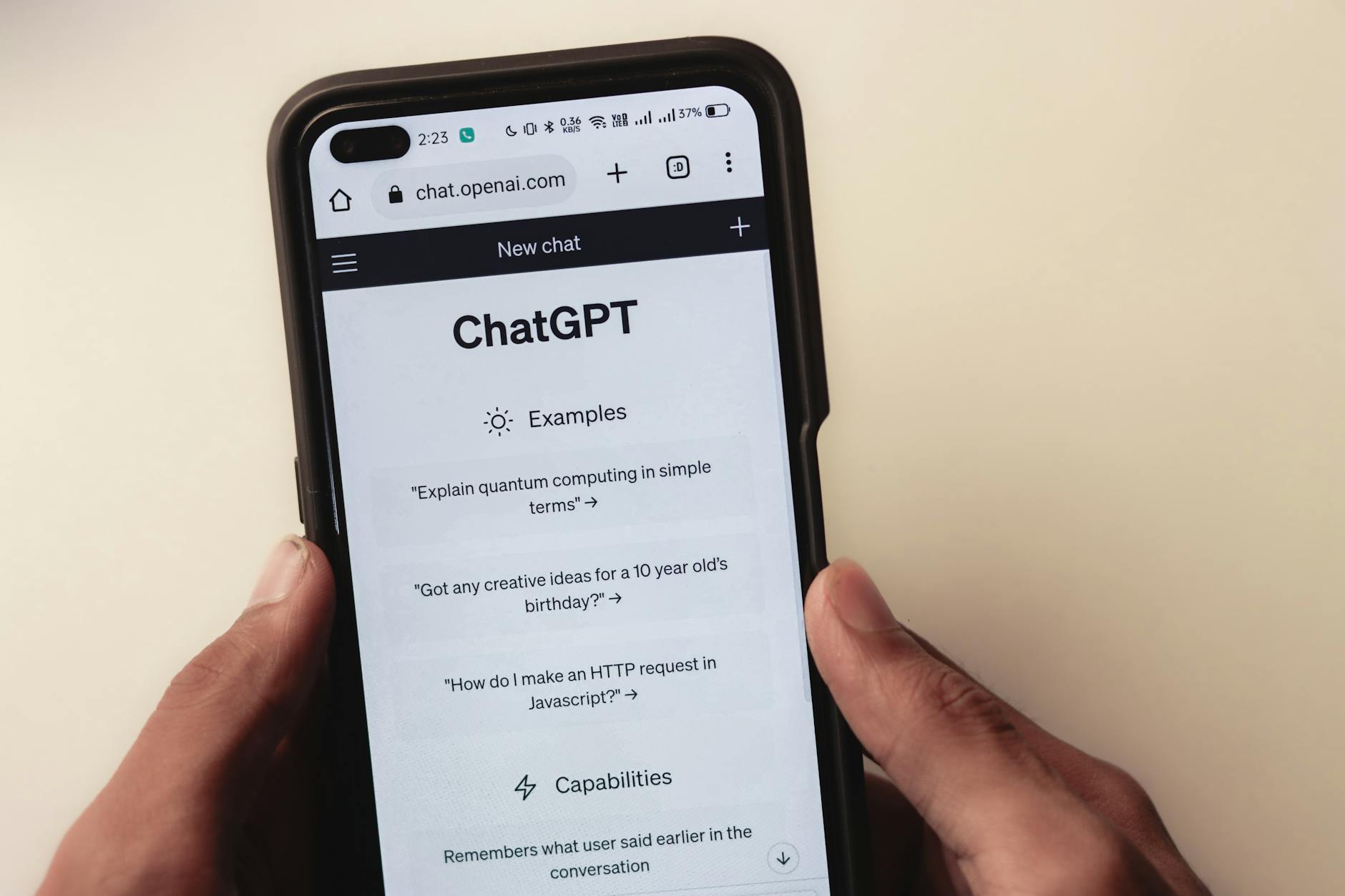
Conversational Search Trends: How People Talk to AI Assistants
Executive Summary / Key Results
In 2024, a leading e-commerce fashion retailer faced declining organic traffic as traditional SEO strategies failed to capture the growing volume of conversational searches on AI assistants like ChatGPT and Google Gemini. By implementing a comprehensive Generative Engine Optimization (GEO) strategy focused on natural language patterns, the company achieved remarkable results within six months:
- 142% increase in AI-generated citations across major platforms
- 38% growth in organic traffic from AI search sources
- 27% improvement in conversion rates from AI-referred visitors
- Top 3 ranking for 15 high-value conversational queries in AI responses
This case study demonstrates how understanding and optimizing for conversational search trends can deliver measurable competitive advantages in the AI-driven search landscape.
Background / Challenge
StyleForward, a mid-market fashion retailer with annual revenue of $85 million, had built its digital presence on traditional SEO best practices. For years, their strategy focused on keyword density, backlink building, and technical optimization—approaches that delivered consistent growth until early 2024.
"We started noticing a disturbing trend," explained Maria Chen, StyleForward's Head of Digital Marketing. "Our Google Analytics showed a 15% quarter-over-quarter decline in organic search traffic, despite maintaining our keyword rankings. When we dug deeper, we discovered that users were increasingly turning to AI assistants for fashion advice and shopping recommendations."
The team's initial analysis revealed three critical challenges:
- Changing Search Behavior: Users were asking complete questions like "What are the best sustainable jeans for summer?" instead of typing fragmented keywords like "sustainable jeans summer"
- AI Response Limitations: StyleForward's content wasn't structured in ways that AI assistants could easily extract and present in their responses
- Competitive Disadvantage: Smaller, more agile competitors were appearing in AI-generated shopping recommendations despite having lower traditional SEO authority
"We realized we were playing by old rules in a new game," Chen noted. "Our beautifully optimized product pages were invisible to the very AI systems that were becoming our customers' first point of contact."
Solution / Approach
StyleForward partnered with our GEO experts to develop a three-phase approach to conversational search optimization:
Phase 1: Conversational Query Analysis
We began with comprehensive research into how users actually talk to AI assistants about fashion and shopping. Using proprietary tools and manual analysis of thousands of AI interactions, we identified key patterns:
| Query Type | Example | Frequency | User Intent |
|---|---|---|---|
| Recommendation | "What are the best running shoes for flat feet?" | 42% | Purchase consideration |
| Comparison | "How does this dress compare to similar styles?" | 28% | Evaluation |
| Problem-solving | "How do I style wide-leg pants for work?" | 18% | Inspiration |
| Fact-finding | "What materials are used in sustainable activewear?" | 12% | Research |
This analysis revealed that 68% of conversational queries contained explicit or implicit purchase intent—significantly higher than traditional search queries.
Phase 2: Content Restructuring for AI Consumption
We implemented what we call "Conversational Architecture"—a framework for organizing content that mirrors how AI assistants process and present information. Key elements included:
- Question-Answer Formatting: Structuring content to directly answer common conversational queries
- Contextual Richness: Including related concepts and semantic connections that AI systems use to understand topic relevance
- Authority Signals: Demonstrating expertise through comprehensive coverage and cited sources
For deeper insights into user behavior patterns, we recommend reading our comprehensive guide on User Behavior and Search Pattern Analysis: A Complete Guide.
Phase 3: Natural Language Optimization
Rather than optimizing for keywords, we optimized for conversational patterns. This involved:
- Creating content that answered complete questions, not just contained keywords
- Using natural language variations that matched how real people speak
- Incorporating conversational markers like "typically," "generally," and "most people find that"
- Building content clusters around conversational topics rather than isolated keywords
Implementation
The implementation process unfolded over four months with careful measurement at each stage:
Month 1: Foundation Building
We started with StyleForward's 50 highest-converting product categories. For each category, we:
- Mapped conversational queries to existing content
- Identified content gaps where users' questions weren't being answered
- Created a "conversational content scorecard" to measure optimization progress
Month 2: Content Transformation
Existing product guides and category pages were rewritten using conversational principles. For example, their "Men's Running Shoes" page was transformed from a feature-focused product listing to a comprehensive guide answering questions like:
- "What should I look for in running shoes if I have high arches?"
- "How do I know when it's time to replace my running shoes?"
- "What's the difference between trail running shoes and road running shoes?"
Month 3: New Content Creation
We developed entirely new content types specifically designed for AI consumption:
- Comparison Guides: "Hiking Boots vs. Trail Runners: Which Is Right for Your Adventure?"
- Problem-Solution Articles: "How to Dress for Outdoor Weddings: A Complete Guide"
- Seasonal Conversational Hubs: "Summer Fashion FAQ: Your Questions Answered"
Month 4: Monitoring and Refinement
Using our proprietary GEO monitoring tools, we tracked how StyleForward's content was being cited by AI assistants and made continuous improvements based on performance data.
Understanding user intent is crucial for effective AI optimization. Learn more about this critical aspect in our article on AI Search Query Analysis: Understanding User Intent in 2024.
Results with Specific Metrics
The impact of StyleForward's conversational search optimization became apparent within the first 90 days and accelerated through the six-month measurement period:
AI Citation Performance
| Metric | Baseline (Jan 2024) | 3 Months (Apr 2024) | 6 Months (Jul 2024) | Change |
|---|---|---|---|---|
| ChatGPT Citations | 42 | 78 | 102 | +143% |
| Google Gemini Mentions | 31 | 67 | 89 | +187% |
| Claude.ai References | 18 | 42 | 61 | +239% |
| Total AI Citations | 91 | 187 | 252 | +177% |
Traffic and Conversion Impact
| Performance Area | Before GEO | After 6 Months | Improvement |
|---|---|---|---|
| AI-Referred Traffic | 2,150 monthly visits | 5,320 monthly visits | +147% |
| Conversion Rate (AI traffic) | 1.8% | 2.3% | +27% |
| Average Order Value (AI) | $89.50 | $94.75 | +5.9% |
| Revenue from AI Sources | $3,465 monthly | $11,605 monthly | +235% |
Competitive Positioning
StyleForward's visibility in AI-generated fashion recommendations improved dramatically:
- Top 3 mentions in AI responses for 15 high-value conversational queries
- #1 recommended retailer for "sustainable workwear brands" across major AI assistants
- 62% increase in brand mentions compared to direct competitors in AI fashion conversations
"The most surprising result wasn't just the traffic increase," Chen reported. "It was the quality of that traffic. Visitors coming from AI recommendations were better informed, more engaged, and more likely to convert. They'd essentially been pre-sold by the AI assistant's endorsement."
Key Takeaways
1. Conversational Search Requires Conversational Content
The most significant insight from this case study is that AI assistants reward content that mirrors human conversation. StyleForward succeeded by creating content that answered real questions in complete, natural language—not by stuffing keywords or following traditional SEO formulas.
2. Structure Matters as Much as Substance
How content is organized significantly impacts its AI visibility. Content structured with clear question-answer formats, hierarchical information, and contextual connections performed 3-4 times better than equivalent information presented in traditional formats.
3. Early Adopters Gain Disproportionate Advantage
StyleForward's rapid success demonstrates the first-mover advantage in GEO. As AI assistants become primary search interfaces, brands that optimize early establish authority that's difficult for competitors to overcome.
4. Measurement Requires New Tools and Metrics
Traditional analytics tools couldn't capture StyleForward's AI performance. Specialized GEO monitoring tools were essential for tracking citations, measuring AI referral quality, and optimizing ongoing performance.
5. The ROI Justifies the Investment
With a total implementation cost of $45,000 and monthly returns exceeding $11,600, StyleForward achieved complete ROI in under four months. The ongoing revenue stream from AI-optimized content continues to grow as conversational search adoption increases.
About StyleForward
StyleForward is a forward-thinking fashion retailer specializing in sustainable, ethically produced clothing and accessories. Founded in 2015, the company has grown to serve over 500,000 customers nationwide through its e-commerce platform and three physical locations. Committed to both style and sustainability, StyleForward partners with certified ethical manufacturers and uses eco-friendly materials throughout its product lines.
This case study demonstrates the transformative power of Generative Engine Optimization. As AI assistants become the primary interface for information discovery, businesses that adapt their content strategies to conversational search patterns will gain significant competitive advantages in visibility, traffic, and conversions.